

Why the order of these steps matters
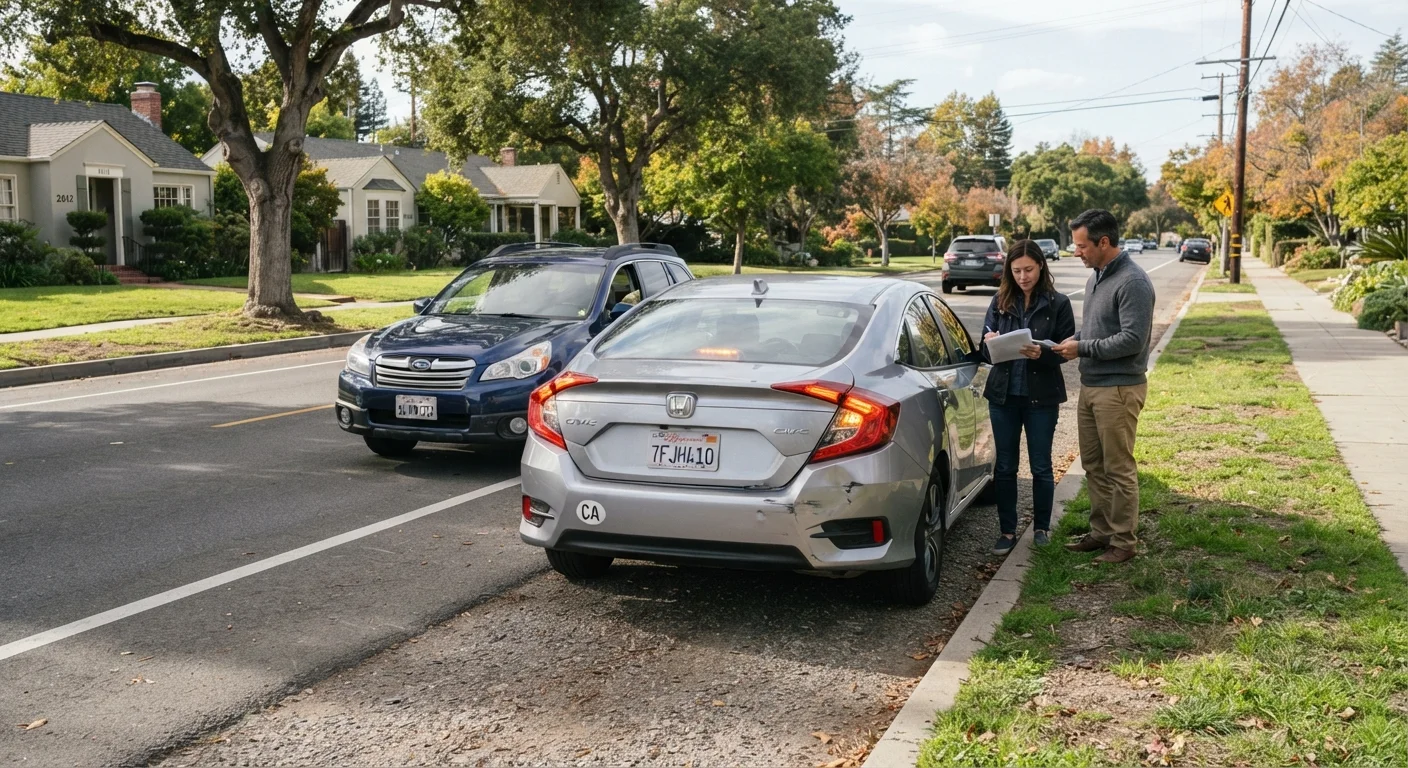
A collision disrupts your thinking at exactly the moment when clear thinking counts most. Going through a set sequence keeps you from skipping something that could affect your safety, your legal standing, or your insurance claim later.
The steps below move from immediate safety to documentation to claims reporting. Each one builds on the last. Skipping documentation, for example, makes it harder to establish what happened once vehicles are moved and the scene is gone.
What you will need
At the scene: safety, information, and evidence
The first few minutes after a crash are the most information-dense. Follow the steps below in order, and use the tools listed here to make the process faster and more reliable.
Smartphone with camera
Photograph vehicle damage, license plates, road conditions, and any visible injuries.
Auto insurance card
Provides your policy number and insurer contact information when exchanging details with other drivers.
Pen and paper or notes app
Record witness names, badge numbers, and details that photos may miss.
Roadside emergency kit
Reflective triangles or flares warn approaching traffic while you handle the scene.
Check for injuries and move to safety
Before anything else, check yourself and any passengers for injuries. If the vehicles are drivable and it is safe to do so, move them out of active traffic to a shoulder or nearby parking lot. Turn on your hazard lights immediately.
If anyone is injured or you cannot move the vehicles, stay put and wait for emergency services. Do not attempt to move someone who may have a spinal or neck injury.
Call 911
Call 911 even if the crash appears minor. In many states, you are legally required to report accidents that involve injury, death, or property damage above a certain dollar threshold. A responding officer will file a police report, which your insurer will likely request.
Tell the dispatcher your exact location, how many vehicles are involved, and whether anyone is injured. Stay on the line until they release you.
Exchange information with the other driver
Collect the following from every other driver involved:
- Full name and contact number
- Driver's license number and issuing state
- License plate number
- Insurance company name and policy number
- Vehicle make, model, and year
Share the same details about yourself. If the vehicle owner differs from the driver, get the owner's name and contact information too.
Document the scene
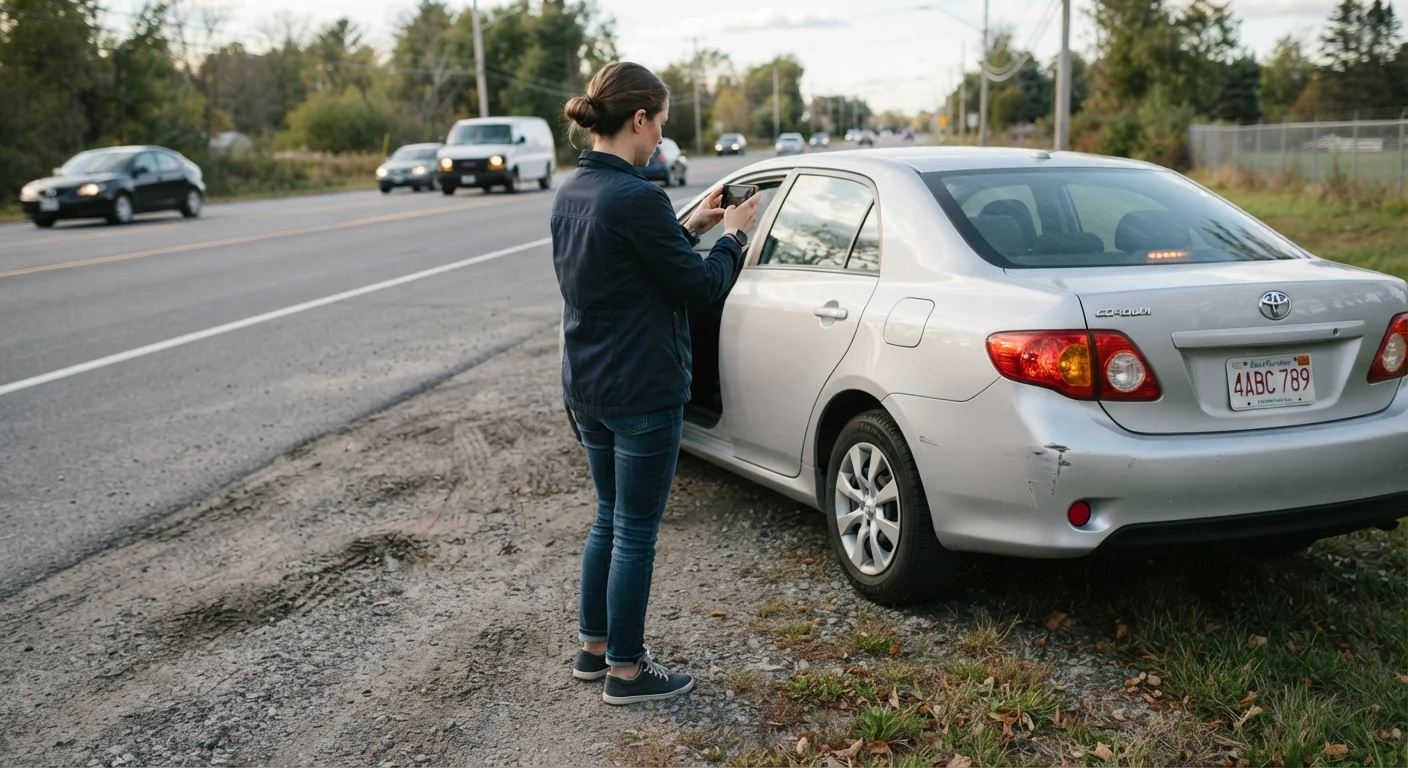
Photograph everything you can before vehicles are moved: damage to all vehicles, license plates, the position of the cars, skid marks, traffic signals, road signs, and any visible injuries. Wide shots and close-ups both help.
If there are witnesses, ask for their names and phone numbers. Note the time, weather, and road conditions in writing while details are fresh.
Notify your insurance company
Contact your insurer as soon as you can, ideally from the scene or within a few hours. Most insurers have a 24-hour claims line and many have mobile apps that let you start a claim on the spot.
Give them the facts: date, time, location, police report number, and the other driver's information. Avoid speculating about fault or injuries; stick to what you observed. If you are unsure what your policy covers, reading through your policy document can clarify which coverages apply to your situation.
Seek medical evaluation
Some injuries, such as whiplash or soft tissue damage, do not produce immediate symptoms. See a doctor even if you feel fine, and keep records of every visit, diagnosis, and treatment. Medical documentation supports any injury claim you file.
If you are covered under your policy's Medical Payments (MedPay) or Personal Injury Protection (PIP) coverage, those provisions may cover initial costs regardless of fault. Your insurer or a licensed agent can confirm what applies to your policy.
After you leave the scene
Once the immediate situation is handled, a few follow-up tasks protect your claim. Keep all paperwork in one place: the police report, any medical receipts, repair estimates, and correspondence with your insurer. If the other driver's insurer contacts you directly, you are not required to give a recorded statement without consulting your own insurer or an attorney first.
If your vehicle needs repairs, your insurer may direct you to a network shop or allow you to choose your own. Either way, get the repair estimate in writing before any work begins.
Understanding what your policy actually covers before a claim arises makes the whole process less stressful. The guide to reading an auto insurance policy walks through declarations pages, exclusions, and endorsements so you know what to expect.
Do not settle at the scene
Some drivers offer to handle damages privately to avoid involving insurers. Accepting a verbal agreement at the scene carries real risk: injuries or hidden vehicle damage may surface later, and you may have no legal recourse once you have agreed to settle informally. Always file a police report and notify your insurer, regardless of how minor the accident seems.
This article is for general informational purposes only and does not constitute legal, financial, or insurance advice. Coverage terms, legal requirements, and claim procedures vary by state and by policy. Consult a licensed insurance agent or attorney for guidance specific to your situation.
The content provided on our blog site traverses numerous categories, offering readers valuable and practical information. Readers can use the editorial team’s research and data to gain more insights into their topics of interest. However, they are requested not to treat the articles as conclusive. The website team cannot be held responsible for differences in data or inaccuracies found across other platforms. Please also note that the site might also miss out on various schemes and offers available that the readers may find more beneficial than the ones we cover.