

What a credit score actually measures
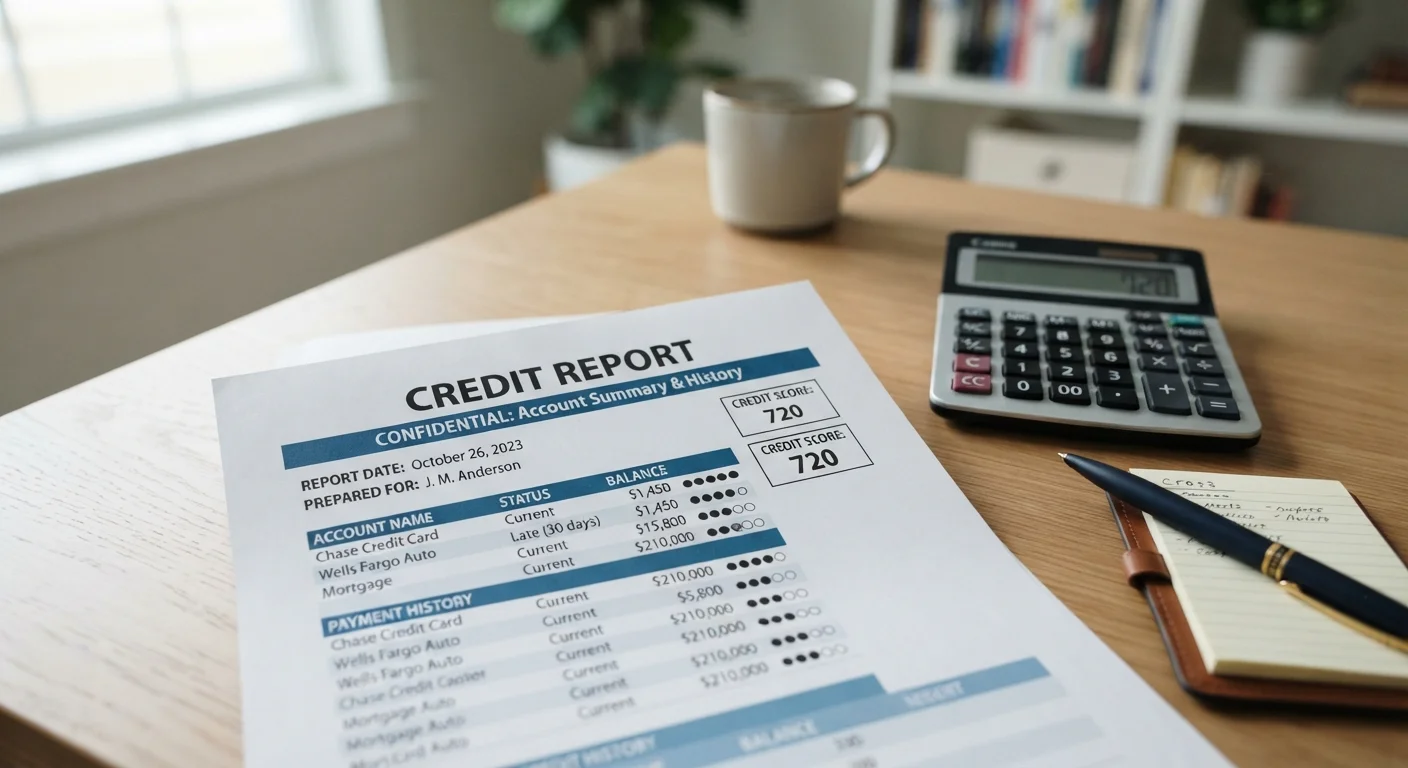
A credit score is not a judgment of personal worth. It is a statistical summary of past borrowing behavior, calculated from the information in your credit report. That report is a running record maintained by the three major credit bureaus, Equifax, Experian, and TransUnion, covering accounts you have opened, balances you carry, payments you have made or missed, and any public records such as bankruptcies.
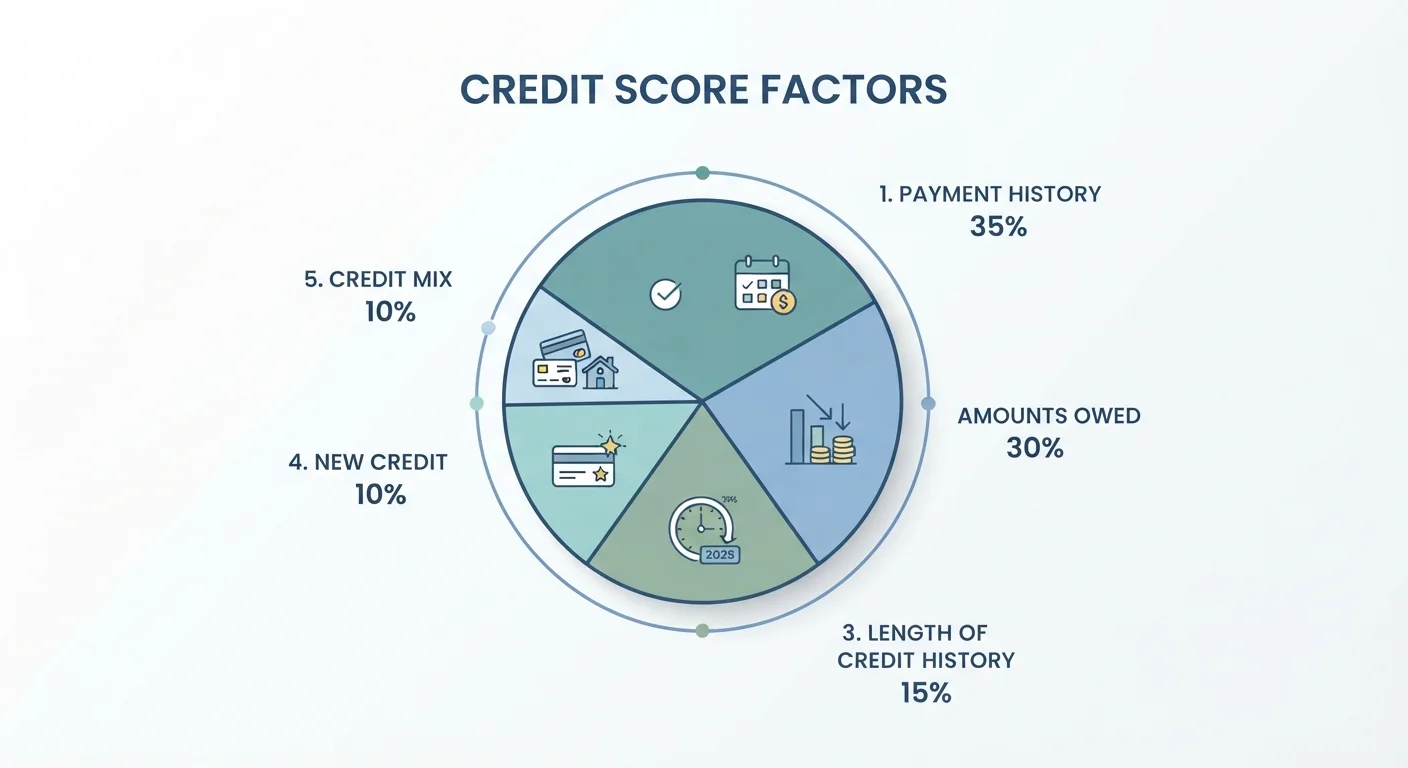
The FICO model, which most U.S. lenders use, weighs five categories of data. Payment history accounts for roughly 35% of the score. The amounts you owe relative to your available credit, called credit utilization, accounts for about 30%. The length of your credit history contributes around 15%. The mix of credit types and recent new credit applications each account for approximately 10%.
VantageScore, a competing model developed jointly by the three bureaus, uses similar data but weights the categories differently. Both models produce scores on the 300-to-850 scale, so the numbers are roughly comparable even if they sometimes differ by a few points for the same person.
Why the number matters beyond borrowing
The most direct impact of a credit score is on loan approvals and interest rates. A borrower with a score above 740 typically qualifies for lower rates on mortgages, auto loans, and credit cards than a borrower with a score of 620. Over the life of a 30-year mortgage, that rate difference can translate to tens of thousands of dollars in total interest paid. This article provides general information; a licensed financial adviser can help you evaluate how your specific score affects your borrowing options.
Landlords routinely pull credit reports before approving rental applications. A low score can result in a rejected application, a requirement for a larger security deposit, or a need for a co-signer. Some employers, particularly in financial services, also check credit as part of background screening, though federal law and many state laws limit how that information can be used in hiring decisions.
35%
Weight of payment history in FICO score
According to FICO's published scoring criteria, payment history is the single largest factor in the standard FICO 8 model.
716
Average U.S. FICO score
Experian's State of Credit report (2023 data) placed the average American FICO score at 716, within the 'good' range.
1 in 5
Americans with a credit report error
A Federal Trade Commission study found that roughly one in five consumers had an error on at least one of their three credit reports.
For anyone carrying existing debt, a stronger score can sometimes open the door to refinancing at a lower rate, which may reduce monthly payments. That outcome is not guaranteed, and it depends on factors beyond the score alone, including income, debt load, and lender criteria.
How to find out your score and what the numbers mean
Federal law gives every consumer the right to one free credit report per year from each of the three major bureaus through AnnualCreditReport.com, the only site federally authorized for this purpose. A credit report and a credit score are not the same thing: the report is the raw data, while the score is the number calculated from it. Many banks, credit unions, and card issuers now display your FICO or VantageScore for free within their apps or online portals.
Score ranges under the FICO model break down as follows: 300 to 579 is poor, 580 to 669 is fair, 670 to 739 is good, 740 to 799 is very good, and 800 to 850 is exceptional. Lenders set their own cutoffs, so the precise threshold for approval varies by institution and product type.
Checking your own score is a soft inquiry and does not affect your score. When a lender checks your credit as part of an application, that is a hard inquiry and can cause a small, temporary dip, typically less than five points. Multiple hard inquiries for the same type of loan within a short window, such as shopping for a mortgage, are usually counted as a single inquiry by scoring models. Be aware that common credit score myths around inquiries and account closures can lead people to make decisions that inadvertently hurt their scores.
This article is for general informational purposes only and does not constitute personalized financial or legal advice. Consult a licensed financial professional for guidance specific to your situation.
Frequently Asked Questions
FICO classifies scores of 670 to 739 as good, 740 to 799 as very good, and 800 or above as exceptional. Scores below 580 are considered poor. These thresholds can vary slightly depending on the lender and the type of credit being sought.
Most scoring models require at least one account that has been open for six months or more, along with at least one account reported to a bureau in the past six months. In practice, a basic score can appear within six months of opening a first credit account.
In most U.S. states, insurers can use a credit-based insurance score, which is derived from credit data, when setting premiums for auto and homeowners policies. This is separate from a lending credit score but draws on similar underlying information. A small number of states restrict or prohibit this practice.
Credit scores are recalculated each time a lender or bureau generates a new report. In practical terms, scores can shift monthly as creditors report updated balances, payment activity, and account changes to the bureaus.
Yes. Inaccurate information, such as a late payment recorded in error or an account that does not belong to you, can lower your score. The Fair Credit Reporting Act gives consumers the right to dispute errors directly with the credit bureaus, which must investigate and correct verified mistakes.
The content provided on our blog site traverses numerous categories, offering readers valuable and practical information. Readers can use the editorial team’s research and data to gain more insights into their topics of interest. However, they are requested not to treat the articles as conclusive. The website team cannot be held responsible for differences in data or inaccuracies found across other platforms. Please also note that the site might also miss out on various schemes and offers available that the readers may find more beneficial than the ones we cover.