


Why contract terms matter more than the quote
A lawn care quote tells you the price. The contract tells you what you actually get for it. Many homeowners sign after reading only the service frequency and monthly cost, then encounter charges they did not expect or find that canceling costs more than continuing. The terms governing scope, renewal, and cancellation deserve the same attention as the price line.
This is general information to help you read agreements more carefully. It is not legal advice. For questions about a specific contract, consult a licensed attorney or consumer protection office in your state.
| Contract length | Typically 1 season or 1 year, with auto-renewal |
| Cancellation window | Commonly 30 to 60 days before term end |
| Early termination fee | Often 1 to 3 months of remaining charges |
| Scope exclusions | Fertilization, aeration, and weed control are frequently add-ons |
| Price change notice | Typically 30 days before renewal |
| Re-treatment window | Notification deadlines range from 2 to 14 days depending on contract |
Scope of service: what is actually included
Scope clauses define which tasks are covered, which are optional add-ons, and which fall outside the agreement entirely. A contract for "lawn maintenance" may cover mowing and edging but exclude fertilization, weed control, or aeration. Each excluded item often carries a separate per-visit fee.
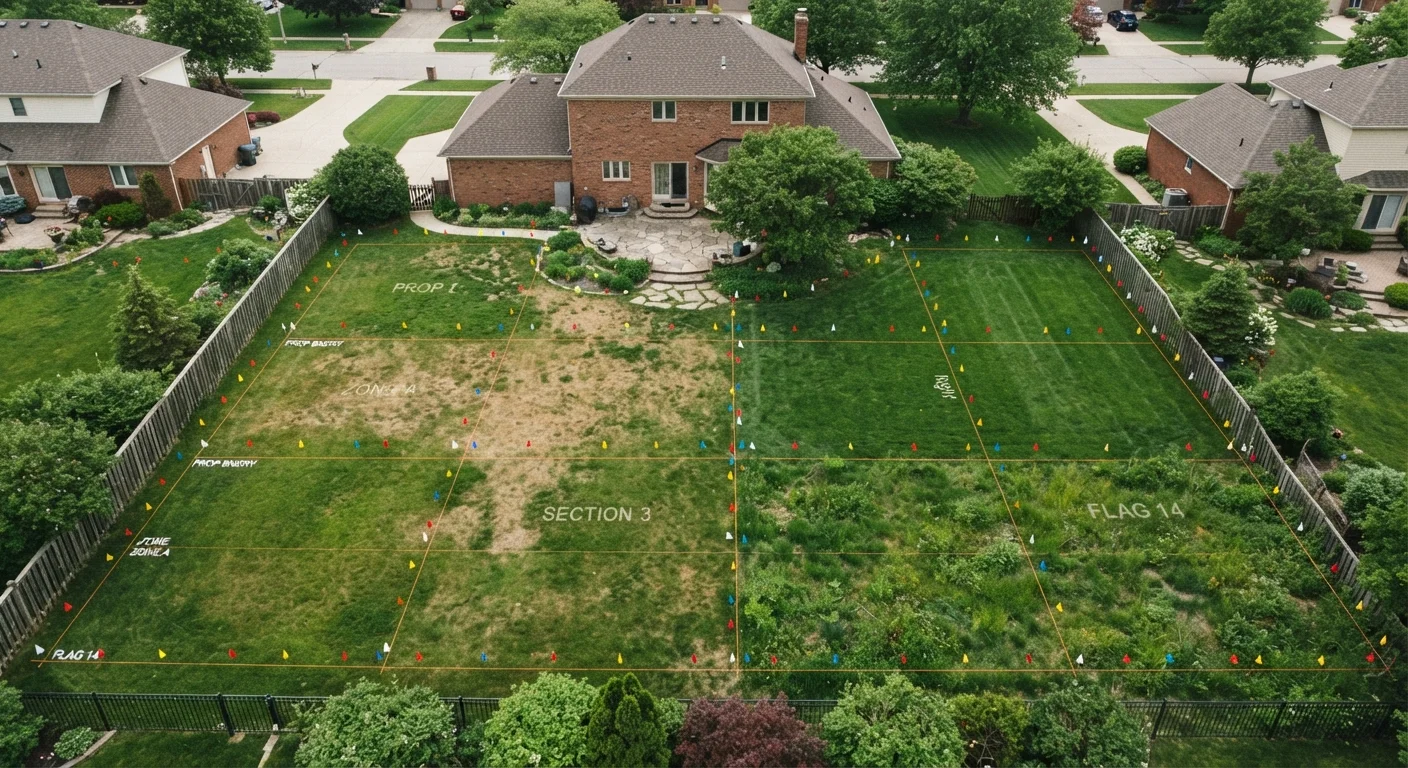
Watch for language like "at technician's discretion" or "as needed." These phrases shift decision-making authority to the provider rather than locking in a specific treatment schedule. If you need a particular service on a fixed interval, get that schedule written into the contract rather than relying on verbal assurances.
Property boundaries matter too. Some contracts cover the front yard only, or exclude areas under 10 feet wide. If you have a side yard, back slope, or strip between the sidewalk and street, confirm in writing whether those are included.
Auto-renewal and cancellation windows
Auto-renewal clauses are among the most consequential terms in any recurring service agreement, and lawn care contracts use them frequently. Under a typical auto-renewal clause, the contract rolls into a new term automatically unless you notify the provider in writing before a specified deadline. That window is often 30 to 60 days before the current term ends.
Missing the cancellation window usually means you are committed to another full season of service. Some contracts also require cancellation via certified mail rather than email or phone call. Check both the method and the deadline, and note them on your calendar before signing.
Early termination fees are common. They typically range from one to three months of remaining service charges. A few contracts calculate the fee as a percentage of the full annual contract value. Read the termination section before you assume you can leave without cost.
If you are comparing recurring service contracts in other home categories, the framework is similar. See what to look for in HVAC service plan terms for a parallel breakdown.
Price change provisions
Many lawn care contracts allow the provider to adjust pricing at renewal with a set notice period, often 30 days. Some include a cap, such as no more than a 5 percent annual increase; others allow unlimited adjustments. If the contract you are reviewing has no price cap, ask whether one can be negotiated before signing.
Mid-season surcharges also appear in some agreements. Fuel surcharges, treatment surcharges tied to chemical cost increases, or fees for "abnormal" grass conditions can add to your bill between annual renewals. Look for any clause that references additional charges or variable fees and ask the provider to explain each one.
Recurring service costs catch many new homeowners off guard, particularly when contracts renew with price increases after the first year.
Service guarantees and re-treatment policies
Some contracts include a satisfaction guarantee or re-treatment clause: if a weed treatment fails or a treated area shows no improvement within a set timeframe, the provider returns at no charge. The value of this guarantee depends entirely on the conditions attached to it.
Common conditions include notifying the provider within a specific number of days, providing photographic documentation, and allowing a defined number of re-treatments before the guarantee is considered fulfilled. A guarantee with a two-day notification window is not practical if you do not check your lawn daily.
If a provider cannot clearly explain their re-treatment policy, ask for the relevant section of the contract in writing before you sign.
For a broader view of managing seasonal outdoor costs, scheduling maintenance by season can help you plan service intervals and identify when contract gaps are most likely to create problems.
A quick glossary of terms you will encounter
Contracts vary in language, but several terms appear consistently. The glossary below covers the ones most likely to affect your costs and options.
Auto-renewal clause
A contract provision that extends the agreement into a new term automatically unless the customer cancels within a specified window. Missing the deadline typically commits you to another full term.
Scope of service
The section of a contract that lists exactly which tasks and property areas are covered. Anything not listed is generally excluded and may be billed as an add-on.
Early termination fee
A charge owed if you cancel before the contract term ends. It is usually calculated as a set number of monthly payments or a percentage of the remaining contract value.
Re-treatment policy
A provision explaining when and how a provider will return to correct a failed treatment at no extra charge. Conditions such as notification deadlines and documentation requirements typically apply.
Price adjustment clause
A term allowing the provider to change pricing at renewal, sometimes with a cap and sometimes without. It defines how much advance notice you will receive before a rate change takes effect.
Surcharge
An additional fee added to your bill for specific conditions such as fuel cost increases or unusually dense grass. These appear outside the base contract price and may not be capped.
This article is for general informational purposes only and does not constitute legal or financial advice. Contract terms vary widely by provider and state. Consult a licensed attorney or your state's consumer protection office if you have questions about a specific agreement.
The content provided on our blog site traverses numerous categories, offering readers valuable and practical information. Readers can use the editorial team’s research and data to gain more insights into their topics of interest. However, they are requested not to treat the articles as conclusive. The website team cannot be held responsible for differences in data or inaccuracies found across other platforms. Please also note that the site might also miss out on various schemes and offers available that the readers may find more beneficial than the ones we cover.