


What an HVAC service plan actually covers
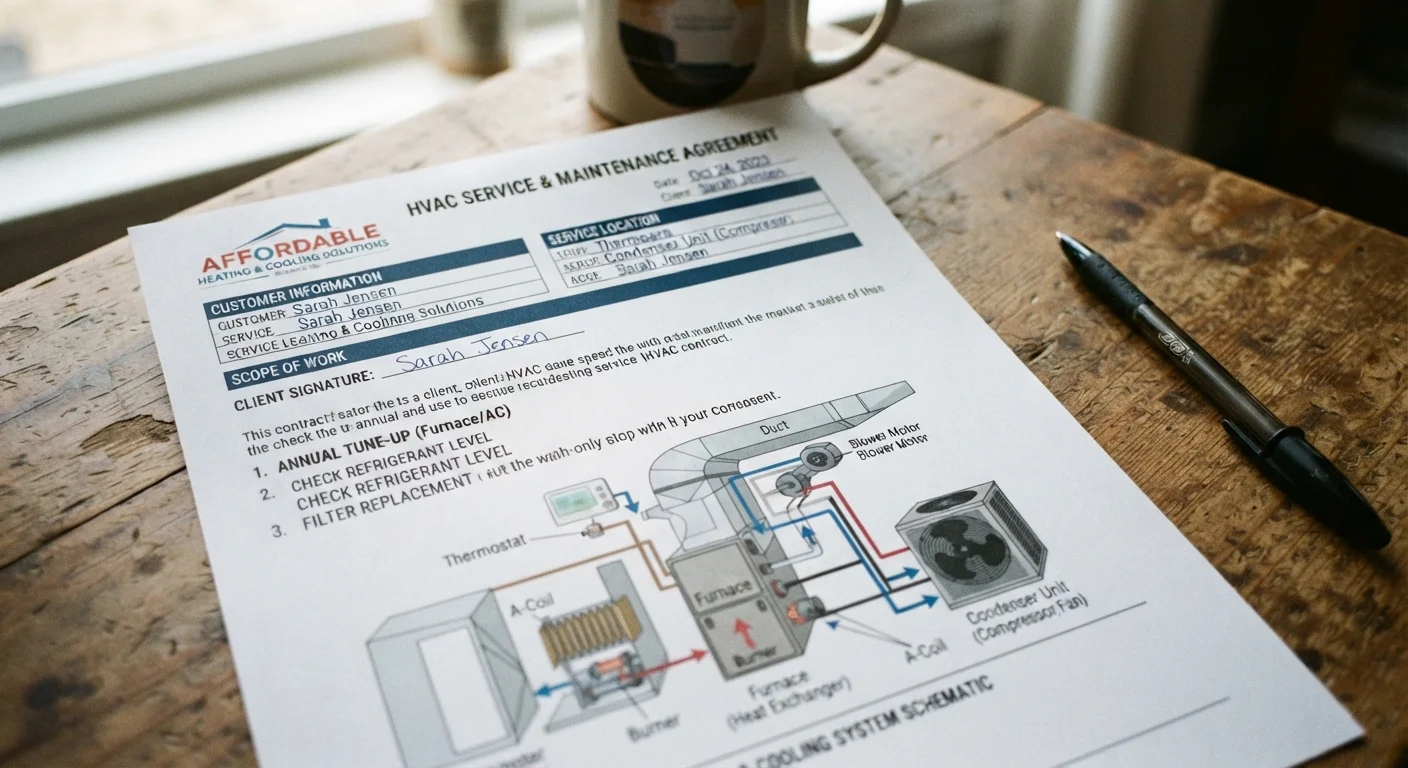
Most HVAC service plans are built around preventive maintenance: scheduled visits where a technician inspects, cleans, and tests your heating and cooling equipment. A standard agreement might include one visit timed for spring (to prepare the cooling system) and one in fall (to check the furnace or heat pump before winter). Those visits typically cover filter inspection, coil cleaning, lubrication of moving parts, thermostat calibration, and a check of electrical connections.
Beyond that baseline, coverage differs sharply by plan tier and provider. Some plans include discounted labor rates on repair calls. Others go further and cover the labor cost in full for listed repairs. A smaller number include parts as well, though this tier usually comes with a higher annual fee and a longer exclusions list.
Before comparing plan prices, check whether the agreement covers refrigerant. Refrigerant is often excluded or capped, and a recharge can cost several hundred dollars depending on the type your system uses.
Common exclusions to read before signing
Exclusions are where most disputes arise. Nearly all plans exclude pre-existing conditions, meaning a problem that existed before the plan started is not covered even if it is discovered during a covered visit. Equipment age limits are also common: some plans will not cover systems older than ten or fifteen years, or they may cover maintenance but not repairs on older units.
Other frequent exclusions include:
- Damage from improper installation or previous repairs done by an uncertified technician
- Failures caused by power surges or lack of regular filter changes
- Secondary damage if a component fails and affects other parts of the system
- Cosmetic issues or ductwork repairs
The exclusions list matters more than the plan summary. A plan described as "comprehensive" may still exclude the specific repair your system ends up needing. Scheduling regular inspections by season can reduce the likelihood of surprise failures, but it does not eliminate the need to read contract terms carefully.
Ask for the full contract before agreeing
Request the complete contract document, not just the plan summary, before you sign. Look specifically for the exclusions list, the definition of a 'covered repair,' any service call fee language, and the cancellation notice window. A reputable contractor will provide this without hesitation.
How pricing and contract terms work
Annual plan costs in the U.S. vary based on region, system type, and what the plan includes. A maintenance-only plan covering two visits per year generally costs less than one that includes labor on repairs. Multi-system plans that cover both a furnace and a central air conditioner cost more than single-unit agreements.
Pay close attention to:
- Auto-renewal clauses: Many plans renew automatically each year. If you want to cancel or switch, there is usually a narrow window to give written notice.
- Service call fees: Some plans charge a separate diagnostic or trip fee each time a technician visits for a repair, even when labor is covered.
- Transferability: If you sell your home, some plans transfer to the new owner, which can be a selling point. Others are tied to the original account holder only.
These contract mechanics are similar to what homeowners encounter in lawn care service agreements: the summary may look straightforward, but the renewal and cancellation clauses carry real financial consequences.
New homeowners who are still sorting out recurring costs may find it useful to review the full range of expenses that emerge in the first two years before committing to any annual service contract.
Deciding whether a plan fits your situation
A service plan is not automatically a good deal or a poor one. Its value depends on your system's age and condition, your local market's labor rates, and how a specific contract defines a covered repair.
Systems still under a manufacturer's warranty may already include some protections that overlap with a service plan's repair coverage. In that case, a basic maintenance-only plan could be sufficient. Older systems that are out of warranty and have more components at risk may benefit from a plan that includes labor, provided the exclusions do not carve out the parts most likely to fail.
If your household is also reviewing smart home upgrades, the way a smart thermostat interacts with your HVAC system can affect how often the system runs and, over time, how much wear it accumulates. That context is worth having before deciding which tier of service plan makes sense.
This article is for general informational purposes only and does not constitute professional financial, legal, or home services advice. Contract terms, costs, and coverage vary by provider and region. Consult a licensed HVAC professional and read the full contract documents before making any service agreement decision.
Frequently Asked Questions
A basic plan usually covers one or two scheduled tune-up visits per year, during which a technician inspects, cleans, and adjusts the system. Filter replacement, refrigerant checks, and priority scheduling for service calls are sometimes included. Parts and labor for repairs are generally not part of a basic plan.
It depends on the plan tier. Some mid-range and premium plans include labor costs for covered repairs, and a few extend to certain parts. Most plans list specific exclusions, so a breakdown caused by a non-covered component may still result in an out-of-pocket bill.
That depends on your equipment's age, local labor rates, and how often you would otherwise pay for tune-ups. Newer systems under manufacturer warranty may see less benefit from a comprehensive plan. Older systems that need more frequent attention may justify the cost, but there is no guarantee of savings.
Most contracts allow cancellation, but some charge a fee or require written notice within a specific window. Check the cancellation terms before signing, and note whether the contract auto-renews annually. This is similar to what you would watch for in <a href="/home-lifestyle/lawn-care-service-contracts-terms-to-know">other home service contracts</a>.
They serve different purposes. An HVAC service plan is focused on one system and is usually sold by the contractor who maintains it. A home warranty may cover multiple systems and appliances but is a separate financial product with its own terms, premiums, and claim processes.
Ask what specific repairs or parts are excluded, whether refrigerant is covered, how the company defines a covered failure, and what happens if your equipment is deemed too old or damaged to repair under the plan. Also confirm the notice period for cancellation and whether the plan transfers if you sell your home.
The content provided on our blog site traverses numerous categories, offering readers valuable and practical information. Readers can use the editorial team’s research and data to gain more insights into their topics of interest. However, they are requested not to treat the articles as conclusive. The website team cannot be held responsible for differences in data or inaccuracies found across other platforms. Please also note that the site might also miss out on various schemes and offers available that the readers may find more beneficial than the ones we cover.