

Our Verdict
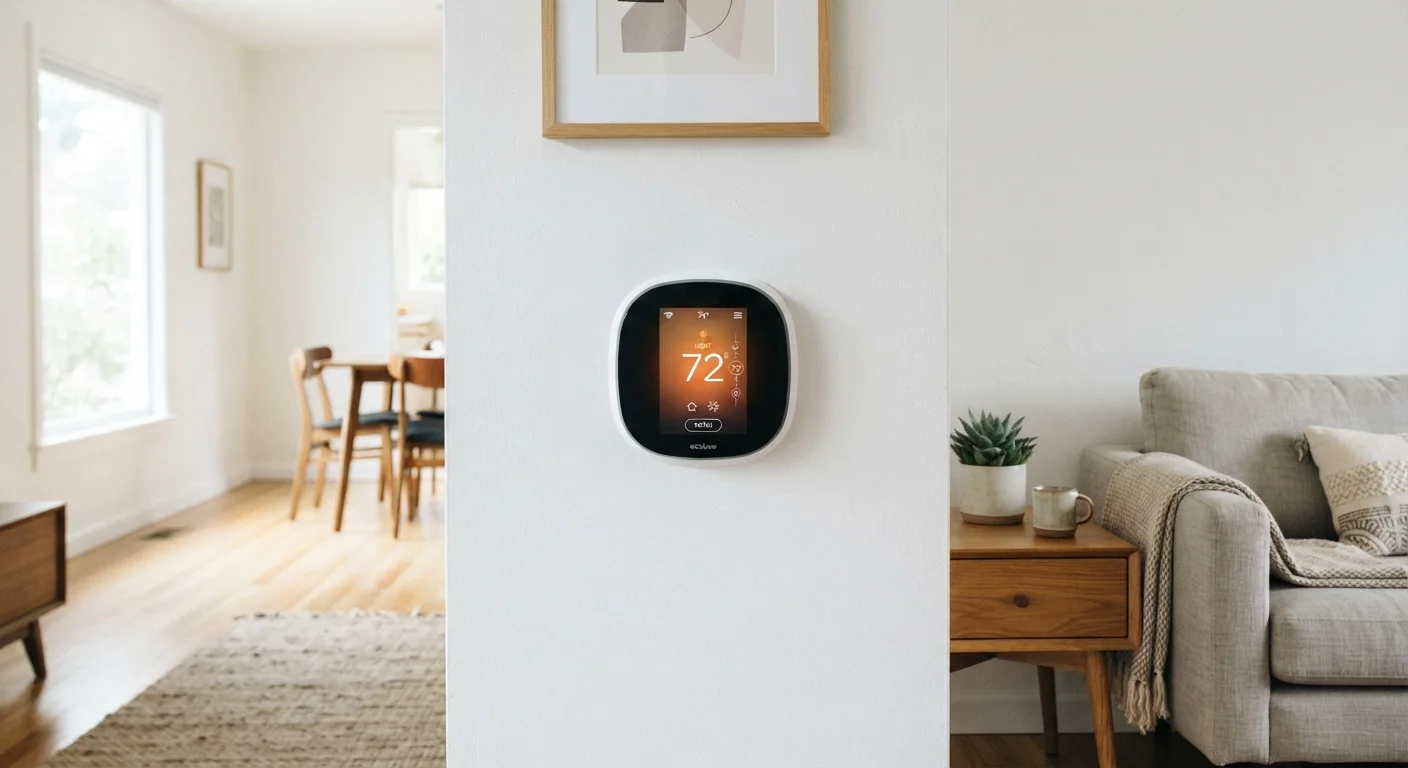
Smart thermostats deliver real convenience and can reduce energy use for households that heat and cool predictable spaces on a consistent schedule. For renters, those with complex multi-zone systems, or homes with outdated wiring, the practical benefits narrow considerably. The technology is mature and generally reliable, but the financial payoff depends heavily on your starting habits and local utility rates.
Homeowners with a regular daily routine, a compatible HVAC system, and moderate-to-high heating and cooling bills who want more control without manual adjustments.
How smart thermostats work
A smart thermostat replaces your standard programmable or manual thermostat and connects to your home Wi-Fi. From there, it communicates with a smartphone app and, in many cases, uses onboard sensors and learned patterns to adjust your heating and cooling without manual input.
Most models track when rooms are occupied using motion sensors or geofencing (detecting when your phone leaves or approaches home). Over days or weeks, the device builds a schedule based on the temperatures you set and when you are typically home. Some models also pull in local weather data to anticipate outdoor temperature swings.
The thermostat sends signals to your HVAC (heating, ventilation, and air conditioning) system the same way a conventional thermostat does, through low-voltage wiring. The added layer is the software and connectivity that sit on top of that basic control. For a fuller picture of how your HVAC system affects overall home energy use, see our guide to home energy audits.
Advantages worth knowing
The practical case for a smart thermostat comes down to four areas.
Automated scheduling reduces manual adjustments
Once the device learns your routine, it adjusts temperatures without daily input. This is useful for households that forget to turn down heating or cooling before leaving.
Remote control via smartphone
You can change the temperature from anywhere with a cell signal. This is practical when travel plans change or someone arrives home earlier than expected.
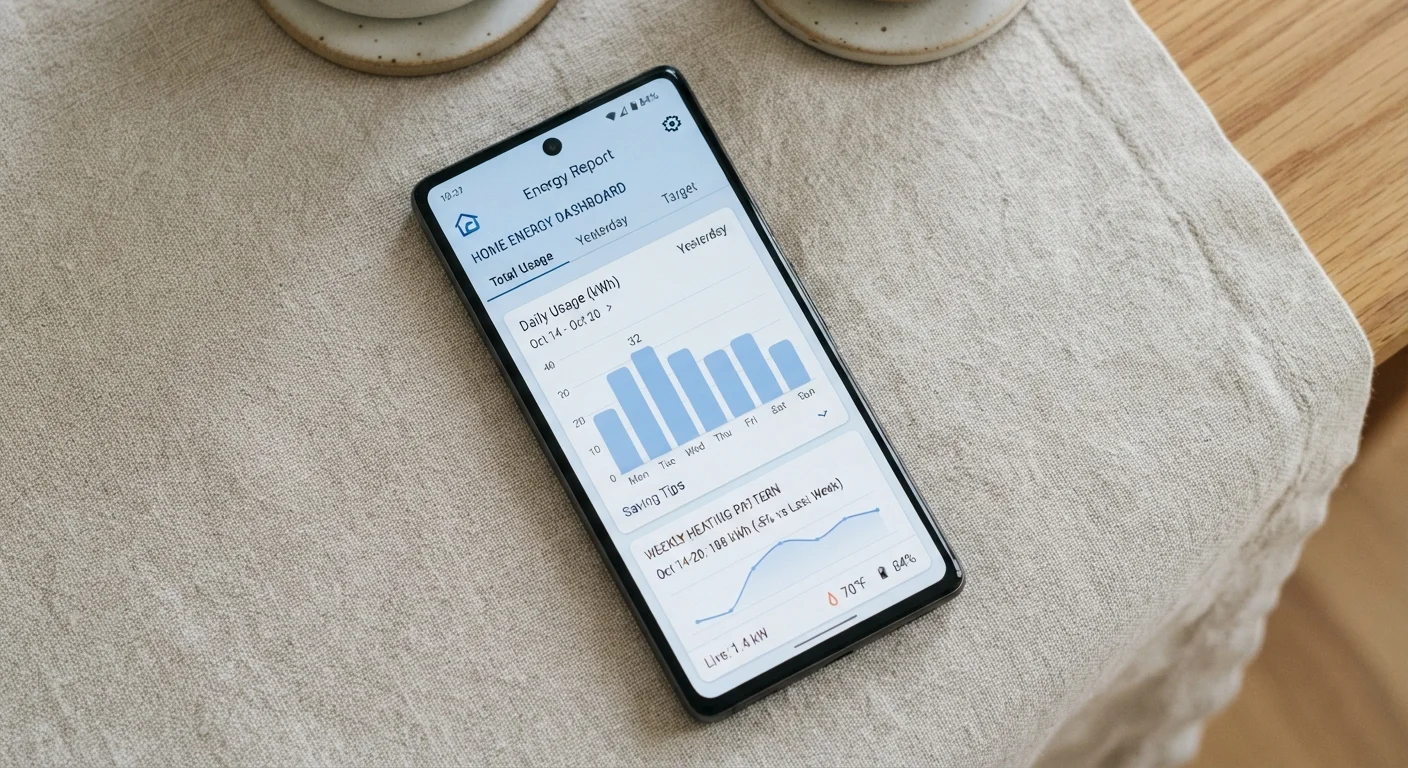
Usage reports show where energy goes
Most apps display daily and monthly heating and cooling run times. This data can reveal patterns that are costing more than expected.
Potential reduction in energy use
The U.S. Department of Energy notes that adjusting your thermostat by 7 to 10 degrees Fahrenheit for eight hours a day can reduce annual heating and cooling costs. A smart thermostat can automate that adjustment consistently.
Many utilities offer rebates for installing qualifying smart thermostats. Check directly with your utility provider, since programs and amounts vary by state and change periodically.
Limitations to weigh before buying
The advertised benefits do not apply equally to every household. Several factors can limit how much value you actually get.
Savings depend on your current habits
If you already keep temperatures moderate and program a conventional thermostat, a smart model may not reduce your bills noticeably. The biggest gains go to households that currently leave temperatures constant around the clock.
Irregular schedules reduce learning accuracy
Shift workers, households with varying routines, or families with members who are often home throughout the day may find the schedule-learning feature less useful or frequently overridden.
Wi-Fi dependency creates single points of failure
Remote features stop working during internet outages. Some models also require cloud accounts, so if the manufacturer discontinues a product line or service, feature availability may shrink.
Upfront cost is higher than basic thermostats
Smart thermostats typically range from around $100 to $300 or more, compared to under $50 for standard programmable models. The payback period varies depending on your utility rates and how much your habits change.
Not all HVAC systems are compatible
Older wiring, certain heat pumps, and multi-zone systems may not work with standard smart thermostat models without additional hardware or professional help.
Renters should check before buying
Most landlords control HVAC systems and may not allow thermostat replacements without written permission. Even where permitted, renters typically cannot recoup the device cost when they move. Confirm your lease terms and get written approval before making any changes to the wiring or thermostat.
Compatibility and installation basics
Before purchasing, check whether your current HVAC system has a C-wire (common wire). This wire provides continuous power to the thermostat. Many older homes have only four wires, and without a C-wire, some smart thermostats either will not work or will operate with reduced reliability. Adapters exist, but they add complexity and cost.
Multi-stage systems, heat pumps, and radiant heating setups each have specific compatibility requirements. Most manufacturers publish online compatibility checkers where you enter your current wiring configuration.
Physical installation is within reach for many homeowners: it typically involves turning off power at the breaker, photographing the existing wiring, disconnecting the old thermostat, and connecting the labeled wires to the matching terminals on the new device. However, if your wiring is unclear, your system is unusual, or you are unsure at any point, a licensed HVAC technician can complete the installation safely. Attempting wiring work without proper knowledge can damage your HVAC system or create a safety hazard.
Pairing a new thermostat with a broader maintenance routine makes sense. Our seasonal home maintenance guide outlines when to schedule HVAC inspections alongside other upkeep tasks. If you are also evaluating ongoing service coverage, HVAC service plan terms explains what maintenance agreements typically include.
The content provided on our blog site traverses numerous categories, offering readers valuable and practical information. Readers can use the editorial team’s research and data to gain more insights into their topics of interest. However, they are requested not to treat the articles as conclusive. The website team cannot be held responsible for differences in data or inaccuracies found across other platforms. Please also note that the site might also miss out on various schemes and offers available that the readers may find more beneficial than the ones we cover.