


Our Verdict
Raising your auto insurance deductible can reduce what you pay each month, but it requires having enough savings to cover that higher amount if an accident happens. The math works in your favor only when the annual premium savings outweigh the added financial risk you are taking on.
Drivers with a clean record, low annual mileage, and enough emergency savings to cover the higher deductible without hardship.
What a deductible actually does
Your auto insurance deductible is the fixed dollar amount you agree to pay toward a covered loss before your insurer pays the remainder. For example, if you have a $750 deductible and a covered repair costs $3,000, you pay $750 and the insurer pays $2,250.
Deductibles typically apply to collision coverage (damage from accidents involving another vehicle or object) and comprehensive coverage (theft, weather, vandalism, and similar events). They generally do not apply to liability coverage, which pays for damage or injury you cause to others.
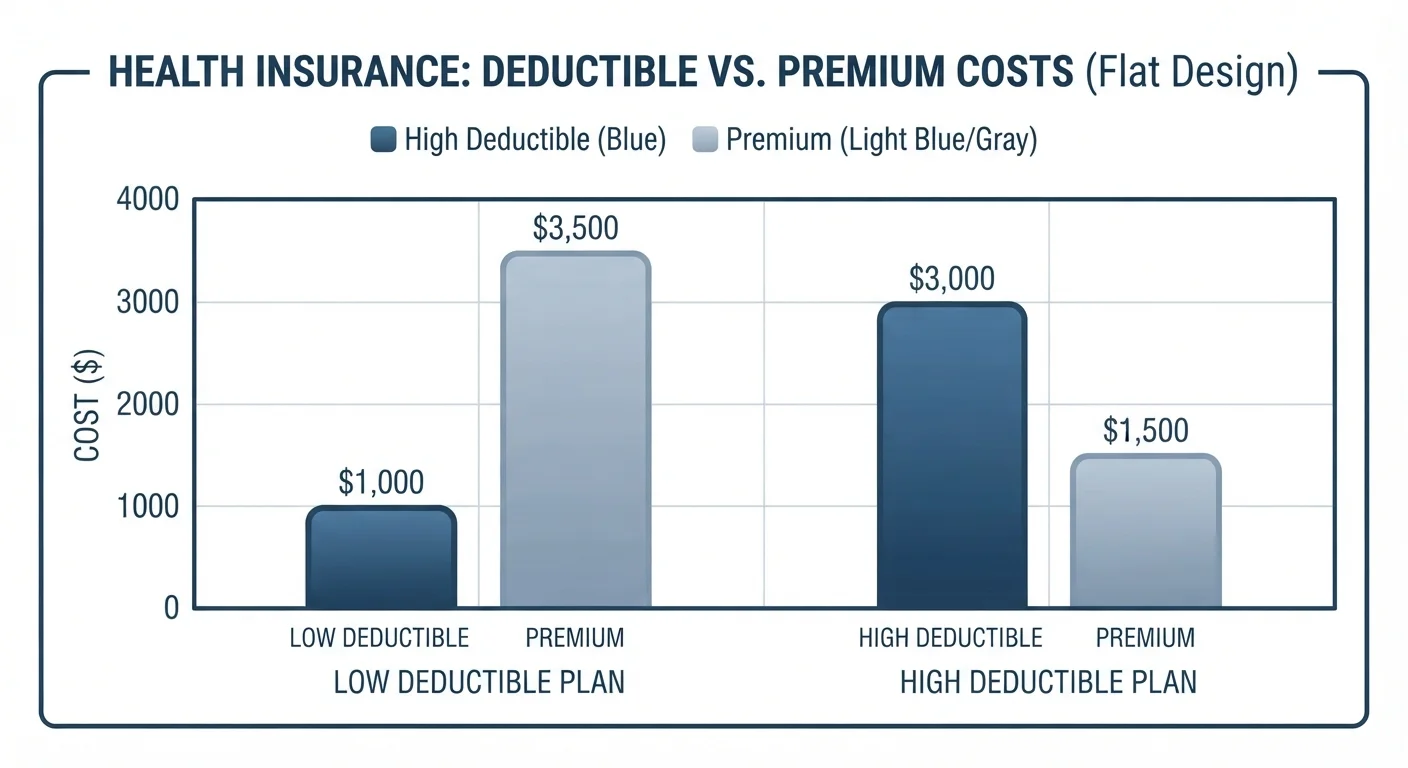
Understanding this structure matters because raising your deductible is a trade-off between predictable monthly savings and unpredictable out-of-pocket costs. The factors that shape your car insurance rate include many variables, but deductible choice is one of the few you can adjust directly.
The case for raising your deductible
Lower monthly or annual premium payments
Insurers treat a higher deductible as a signal that you are absorbing more risk yourself, which typically reduces the premium they charge. The savings can be meaningful, though the exact amount depends on your insurer, state, and coverage type.
Less incentive to file small claims
When your deductible is high, minor fender-benders may cost less than the deductible itself, so you pay out of pocket and avoid a potential rate increase tied to claim history.
Premium savings can build an emergency fund
If you consistently save the difference between your old and new premium, you can build a reserve specifically for auto repairs, making the higher deductible easier to handle if a claim does arise.
The most straightforward reason to raise your deductible is premium reduction. Because you are agreeing to absorb more of any future loss yourself, the insurer's exposure shrinks and the premium follows. For drivers who rarely file claims, those savings accumulate over time without a corresponding cost.
There is also a behavioral benefit. With a high deductible, small claims become less attractive to file, since a minor repair might cost close to or less than the deductible itself. Avoiding small claims can help protect your claim history, which is one input insurers use when setting renewal rates. See discounts that can reduce your auto insurance premium for other ways to keep costs down.
The case against raising your deductible
Higher immediate cost after any covered accident
If you file a claim, you must pay the full deductible before your insurer contributes. A jump from $500 to $1,500 means you need $1,000 more available cash at the moment you can least afford a surprise expense.
Break-even can take years of accident-free driving
If the premium savings are $200 per year but you raise your deductible by $1,000, it takes five accident-free years just to break even. One claim in that window erases the savings.
Creates financial hardship for drivers with limited savings
A high deductible is only practical if you can pay it on short notice. Drivers without a cash cushion may struggle to get their vehicle repaired quickly after an accident.
Does not reduce liability or medical coverage costs proportionally
Deductibles typically apply to collision and comprehensive coverage, not to liability or medical payments. Raising the deductible may not lower the full premium as much as expected.
The central problem with a high deductible is liquidity. Insurance is supposed to protect you from financial shock, but a $1,500 or $2,000 deductible can itself become a financial shock if your savings are thin. A driver who cannot pay the deductible promptly may be unable to get the vehicle repaired, which affects both safety and the ability to get to work.
Deductibles apply per claim, not per year
Unlike health insurance, where an annual deductible resets each year, most auto insurance deductibles apply each time you file a covered claim. If you have two accidents in one year, you pay the deductible twice. This makes the total financial exposure higher for drivers in areas with elevated accident risk.
Senior drivers may want to be especially careful here. Fixed incomes can make a large, sudden out-of-pocket expense harder to absorb. The article on auto insurance for senior drivers covers additional factors that older drivers should weigh when reviewing coverage.
How to decide what works for your situation
Start by calculating the break-even point. Get a quote for your current deductible and for a higher one, find the annual premium difference, then divide the deductible increase by that annual savings. The result is the number of accident-free years needed before the strategy pays off financially.
If that break-even is two or three years and you have a clean driving record, the math may favor a higher deductible. If it is six or seven years, the risk may not be worth it. You should also honestly assess whether you have the cash available to cover the higher deductible without borrowing.
Your driving patterns matter too. High-mileage drivers face more exposure to accidents than those who drive rarely. If you drive infrequently, a higher deductible may carry less risk. For a broader view of how different coverage structures compare, the piece on usage-based vs. traditional auto insurance may be useful context.
This article is for general informational purposes only and does not constitute personalized insurance, financial, or legal advice. Coverage terms, premiums, and deductible options vary by insurer, policy, and state. Read your policy documents carefully and consult a licensed insurance agent before making changes to your coverage.
The content provided on our blog site traverses numerous categories, offering readers valuable and practical information. Readers can use the editorial team’s research and data to gain more insights into their topics of interest. However, they are requested not to treat the articles as conclusive. The website team cannot be held responsible for differences in data or inaccuracies found across other platforms. Please also note that the site might also miss out on various schemes and offers available that the readers may find more beneficial than the ones we cover.