

Our Verdict
Traditional insurance suits drivers who want predictable premiums and prefer not to share driving data. Usage-based insurance can lower costs for people who drive infrequently or maintain consistently safe habits, but it introduces data-sharing considerations that each driver should weigh carefully.
| Best for | Recommended |
|---|---|
| Drivers who want rate stability and privacy | Traditional auto insurance |
| Low-mileage drivers or those with consistently safe habits | Usage-based insurance |
| Seniors driving fewer miles in retirement | Usage-based insurance |
| Drivers with complex commutes or unpredictable schedules | Traditional auto insurance |
How each model sets your rate
Traditional auto insurance uses a set of fixed rating factors to calculate your premium before you drive a single mile. Insurers look at your driving record, age, location, credit history in states that allow it, the vehicle you drive, and how much coverage you select. These factors are combined into a risk profile, and your rate stays relatively stable until your policy renews or a major change occurs. Many of these variables are outside your direct control on a day-to-day basis.
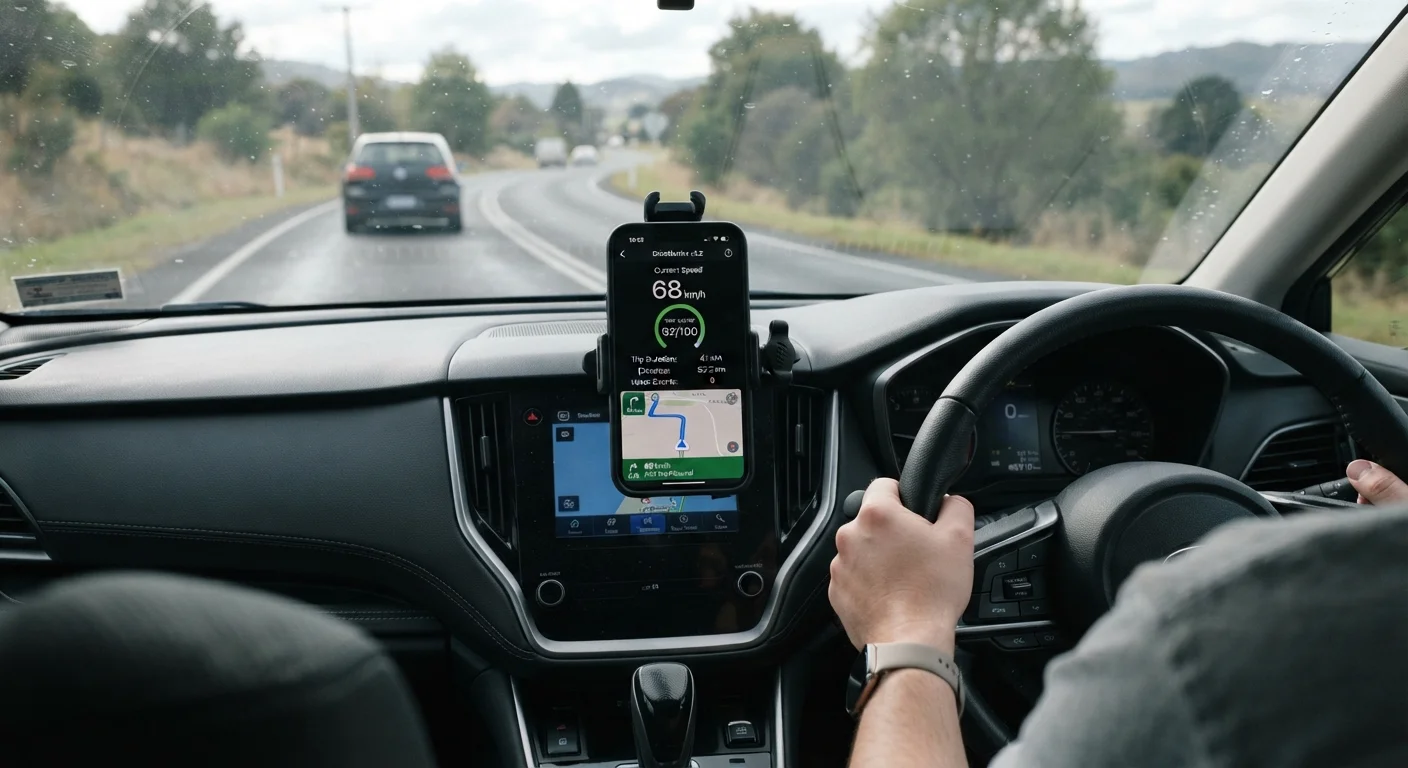
Usage-based insurance (UBI), sometimes called telematics insurance, takes a different approach. Instead of relying solely on historical and demographic data, it collects information about how you actually drive. A plug-in device connected to your car's OBD-II port, or a smartphone app, monitors behaviors such as speed, hard braking, rapid acceleration, time of day, and total miles driven. The insurer then adjusts your rate based on that data, either at renewal or on an ongoing basis depending on the program structure.
Pay-per-mile programs are a specific type of UBI that charge a base rate plus a per-mile fee. These differ from behavior-based programs, which focus on driving style rather than distance alone.
What telematics programs actually measure

Behavior tracked by telematics programs typically falls into a few categories. Hard braking events, meaning sudden stops that exceed a set deceleration threshold, are weighted heavily in most scoring models because they correlate with following distance and attention. Speed over posted limits, late-night driving, and phone use while driving are also common inputs, though the exact factors vary by insurer.
Mileage is straightforward: the fewer miles you drive, the less exposure you have to a potential accident, so low-mileage drivers generally benefit from UBI pricing. According to the Insurance Information Institute, annual mileage is already factored into traditional policies at a broad level, but telematics programs can capture it with more precision.
One point worth understanding: some programs start with a discount and then adjust it based on your score over a monitoring period. Others work in reverse, beginning at a standard rate and applying a discount at renewal if your data supports it. Reading the specific program terms matters before you enroll.
| Factor | Traditional insurance | Usage-based insurance | |
|---|---|---|---|
| Rate basis | Demographics, history, vehicle | Driving behavior and/or mileage | |
| Data collection | None ongoing | Telematics device or app | |
| Privacy trade-off | None beyond application data | Location and behavior data shared | |
| Rate predictability | Stable between renewals | Can shift based on driving score | |
| Low-mileage benefit | Broad estimate used | Precise mileage measured | |
| Availability | Universal | Varies by insurer and state | |
| Potential savings | Through discounts and record | Through safe driving score | |
| Coverage types available | Full range | Full range | |
| Best for | Stable-profile drivers | Safe, low-mileage drivers | |
| Monitoring period | Not applicable | Typically 90 days or ongoing |
Privacy and data considerations
Sharing driving data is the central trade-off in any UBI program. The data collected can include GPS location, travel times, and driving patterns detailed enough to reconstruct daily routines. Insurers generally publish their data-use policies, but those documents vary in how long data is retained, whether it is shared with third parties, and under what circumstances it could be disclosed.
Drivers who are comfortable with app-based data sharing in other parts of their lives may find this unremarkable. Others, particularly those who value location privacy, may prefer to keep their insurer relationship transactional. Neither position is wrong; it depends on what you weigh more heavily.
Understanding why premiums change is useful context here: if your driving score declines during a monitoring period, your rate could go up at renewal in a UBI program in a way it would not under a traditional structure tied to a clean record.
Ask about the monitoring period length
Most behavior-based programs collect data for a set window, often 90 days, before applying a score to your renewal. Ask your insurer exactly when monitoring begins, how long it runs, and whether your score can be reviewed if a legitimate anomaly affects it. Knowing the mechanics upfront helps you make sense of any rate change at renewal.
Who tends to benefit from each model
Traditional insurance generally works in your favor if your demographic profile is already favorable, meaning a long clean record, a safe vehicle, and a stable address. Your rate reflects that history without requiring ongoing data collection. It also suits drivers whose jobs or schedules involve irregular hours, long highway drives, or patterns that telematics algorithms might score poorly even if actual risk is low.
UBI tends to benefit drivers who put fewer miles on their cars each year, retirees who have moved away from daily commutes, or drivers whose day-to-day behavior is consistently smooth and unhurried. Senior drivers who drive primarily in daylight hours on familiar local roads are often cited as a profile that scores well under behavior-based models.
If you already qualify for a range of policy discounts, reviewing those programs alongside any UBI option gives a fuller picture of where savings are actually available to you.
This article is general information about auto insurance structures and is not personalized insurance or financial advice. Coverage terms, program availability, and rating practices vary by insurer and state. Read actual policy documents and speak with a licensed insurance agent before making coverage decisions.
The content provided on our blog site traverses numerous categories, offering readers valuable and practical information. Readers can use the editorial team’s research and data to gain more insights into their topics of interest. However, they are requested not to treat the articles as conclusive. The website team cannot be held responsible for differences in data or inaccuracies found across other platforms. Please also note that the site might also miss out on various schemes and offers available that the readers may find more beneficial than the ones we cover.