


Why these terms matter before you compare plans
Health insurance documents use a consistent vocabulary, and that vocabulary directly controls how much you pay for care. Misreading one term, such as confusing your deductible with your out-of-pocket maximum, can produce unexpected bills. This reference covers the terms that appear most often on plan summaries, explanation of benefits statements, and provider invoices.
If you are buying coverage for the first time, the starter guide for first-time buyers explains how these terms fit into the broader decision-making process. For a look at how similar vocabulary appears in other insurance contexts, see how to read an auto insurance policy.
This article is general health insurance information and education, not personalized insurance, financial, or legal advice. Coverage terms, costs, and eligibility vary by plan, insurer, and state. Read your actual policy documents and consult a licensed insurance agent or adviser for guidance specific to your situation.
Core cost-sharing terms
Cost-sharing is the portion of medical costs you pay yourself rather than your insurer covering. Four terms define how that split works.
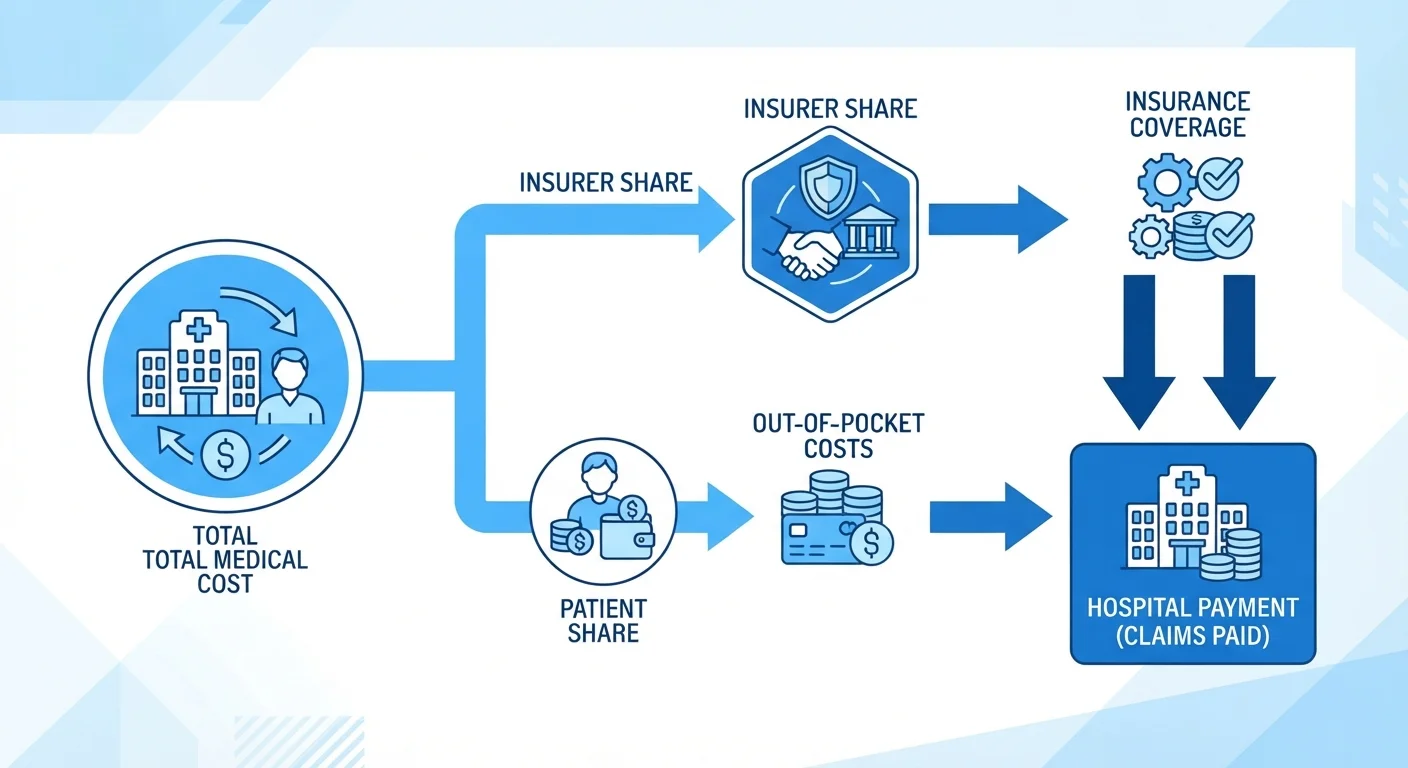
Premium is the fixed monthly amount you pay to keep your coverage active, regardless of whether you use any medical services that month.
Deductible is the amount you pay out of pocket for covered services before your insurance begins paying its share. A plan with a $2,000 deductible means you cover the first $2,000 in eligible costs each plan year. HDHPs pair lower premiums with higher deductibles; the trade-offs of high-deductible health plans are worth reviewing before choosing that structure.
Copay (short for copayment) is a fixed dollar amount you pay for a specific service, such as $30 for a primary care visit, at the time of that service. Copays may apply before or after your deductible, depending on the plan.
Coinsurance is your percentage share of costs after you have met your deductible. If your plan has 20% coinsurance and a covered procedure costs $500, you pay $100 and your insurer pays $400.
| Premium timing | Due monthly, regardless of whether you receive any care |
| Deductible reset | Resets at the start of each plan year, not each calendar year |
| Copay vs. coinsurance | Copay is a flat dollar amount; coinsurance is a percentage of the cost |
| Out-of-pocket max | Premiums and out-of-network costs typically do not count toward this cap |
| Formulary tiers | Most plans use 3 to 5 tiers; generic drugs are usually on the lowest tier |
| Network types | HMO, PPO, EPO, and POS plans each handle out-of-network access differently |
Out-of-pocket maximum and allowed amount
Your out-of-pocket maximum is the most you will pay in covered costs during a plan year. Once you reach it, your insurer covers 100% of covered in-network services for the rest of that year. Premiums and costs for out-of-network care typically do not count toward this cap.
The allowed amount (sometimes called the negotiated rate or eligible expense) is the maximum your insurer will pay for a specific service from an in-network provider. If a provider charges more than the allowed amount, you may owe the difference, a practice called balance billing, which is regulated differently across states.
Understanding the difference between these two figures helps explain why a bill can still arrive even after you believe your insurer has taken over. Confirming whether a provider is in-network before a scheduled service reduces that risk. For broader financial vocabulary that complements these concepts, see personal finance vocabulary every adult should know.
Network, formulary, and coordination of benefits
A network is the set of doctors, hospitals, and other providers that have contracted with your insurer at negotiated rates. Seeing an in-network provider generally costs less than seeing an out-of-network one. HMO plans typically require you to stay in-network; PPO plans allow out-of-network care at a higher cost.
A formulary is your plan's list of covered prescription drugs, usually organized into tiers that correspond to different cost-sharing levels. Tier 1 drugs (often generic) carry the lowest copay; specialty drugs on higher tiers can require significant coinsurance. Checking the formulary before enrolling tells you what your prescriptions will actually cost.
If you are covered under more than one health plan, coordination of benefits rules determine which plan pays first (the primary plan) and whether the second plan covers remaining costs. This situation arises when spouses each carry their own employer coverage or when a child is covered by both parents' plans.
Misunderstandings about how these terms work are common. The article health insurance myths that cost people money addresses several misconceptions about network coverage and emergency care that lead to avoidable expenses.
The content provided on our blog site traverses numerous categories, offering readers valuable and practical information. Readers can use the editorial team’s research and data to gain more insights into their topics of interest. However, they are requested not to treat the articles as conclusive. The website team cannot be held responsible for differences in data or inaccuracies found across other platforms. Please also note that the site might also miss out on various schemes and offers available that the readers may find more beneficial than the ones we cover.